
Start with 3Blue1Brown if you want a mathematical idea to click, Technology Connections if you'd like to understand an ordinary object, or TED-Ed for a short question you hadn't thought to ask.
These 30 educational YouTube channels are for adults who enjoy learning without needing an exam at the end. The selection runs from economics and maps to philosophy, language, art, design and practical skills. Each channel has two starting videos and a route through its library, whether you want a single interesting evening or a subject to study properly.
Where to start
| You want | Start with |
|---|---|
| To see what a mathematical idea means | 3Blue1Brown |
| A broad subject taught in order | CrashCourse |
| One idea in less than five minutes | TED-Ed |
| The hidden design of everyday objects | Technology Connections |
| To understand an economic argument | Money & Macro |
| Maps with a sense of humor | Map Men |
| A reason English works that way | RobWords |
| Help looking closely at a painting | Great Art Explained |
| A first step into practical competence | Dad, how do I? |
| To spot the structure of an argument | Wireless Philosophy |
How we picked these
This is an editorial ranking based on clarity, source transparency and how rewarding a channel is to explore. We favored explanations with identifiable creators, useful examples and a reason to keep watching. Breadth matters too: a good adult-learning lineup should make room for a painting, a household task and an economic idea. Even a great explainer can get things wrong. If something surprises you, take a look at their sources.
The links lead to the creators' own channels and uploads. Standalone means you can jump in; course means following the subject sequence helps; hybrid offers both. Activity labels reflect checks on 2 November 2026: active channels have recent public uploads, intermittent ones have gaps or a less clear public cadence, and archive picks are recommended for their existing lessons. Availability can vary by video and country. Subject limits, such as US law or finance, are explained in the relevant entries.
The top 10
1. 3Blue1Brown

Visual mathematics · Hybrid · Algebra helpful · Active
Grant Sanderson makes abstract math visible: a changing waveform, a rotating vector, a transformation you can follow across the screen. Choose this when you remember a formula but never understood what it was doing. The visual explanations reward pausing; familiarity with algebra helps more than speed at mental arithmetic.
Start with But what is the Fourier Transform? A visual introduction. (19:42) for a self-contained exploration of signals. Eigenvectors and eigenvalues (17:16) shows the same approach inside a course, but it's Chapter 14, so newcomers should follow Essence of Linear Algebra from the beginning. These pictures build intuition; you'll still need exercises if you want to use the mathematics.
2. CrashCourse
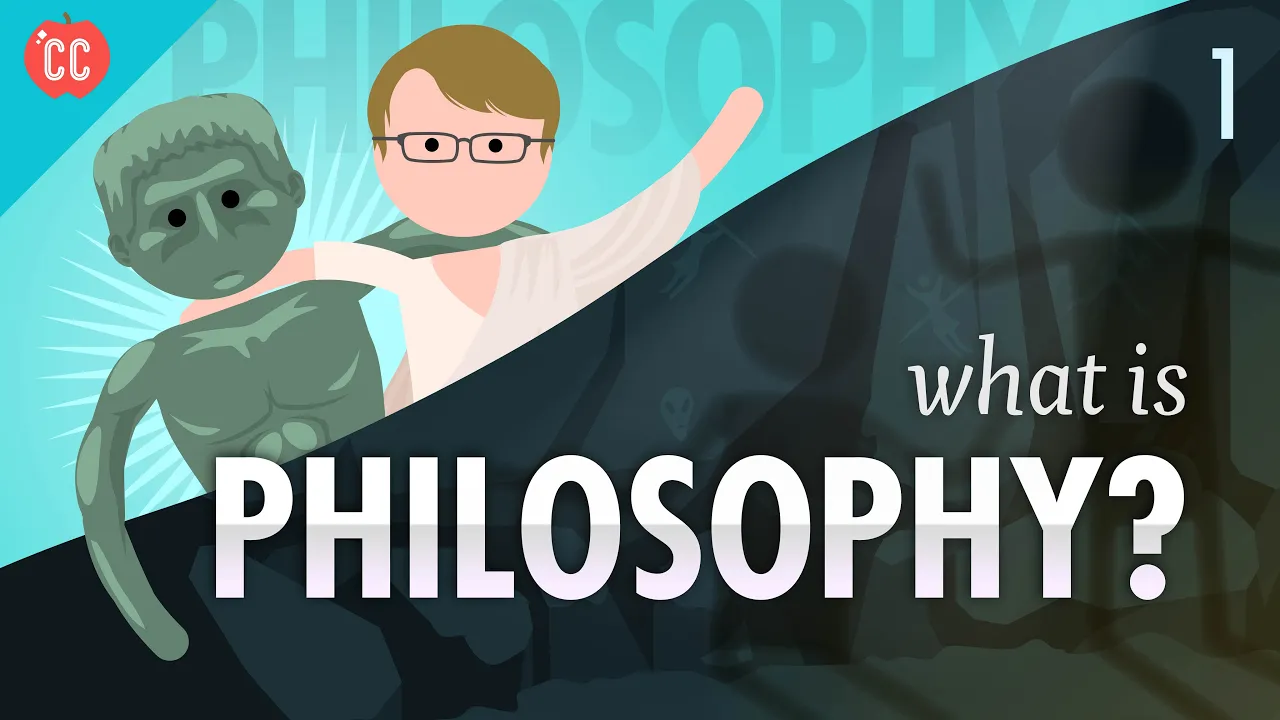
Broad academic subjects · Course · Beginner–college · Active
CrashCourse is the pick when an interesting question turns into a wish to learn a whole subject. Complexly's series moves quickly through ideas with presenters and animation, covering far more than science and history. Philosophy and economics make particularly useful entrances for adult learners.
Try What is Philosophy?: Crash Course Philosophy #1 (10:35) with Hank Green, or Intro to Economics: Crash Course Econ #1 (12:09) with Jacob Clifford and Adriene Hill. They're separate course openers: choose one subject and continue its numbered episodes. You can sample either on its own, but the fast pace leaves little room for practice or extended debate.
3. TED-Ed

Short ideas across subjects · Standalone · Beginner · Active
TED-Ed is a good choice when you've got one question and a few spare minutes. Its animated lessons put a narrow idea at the center, with an educator and animation team credited for each film. That variety makes it easy to move from reading a chart to understanding a market without signing up for a course.
Watch How to spot a misleading graph (4:10), then What causes economic bubbles? (4:17). Both stand alone and take less than five minutes. The first gives you something to notice the next time a chart makes a persuasive claim; the second offers a compact economic model. Treat that brevity as an invitation to keep asking questions, rather than a complete account.
4. Technology Connections
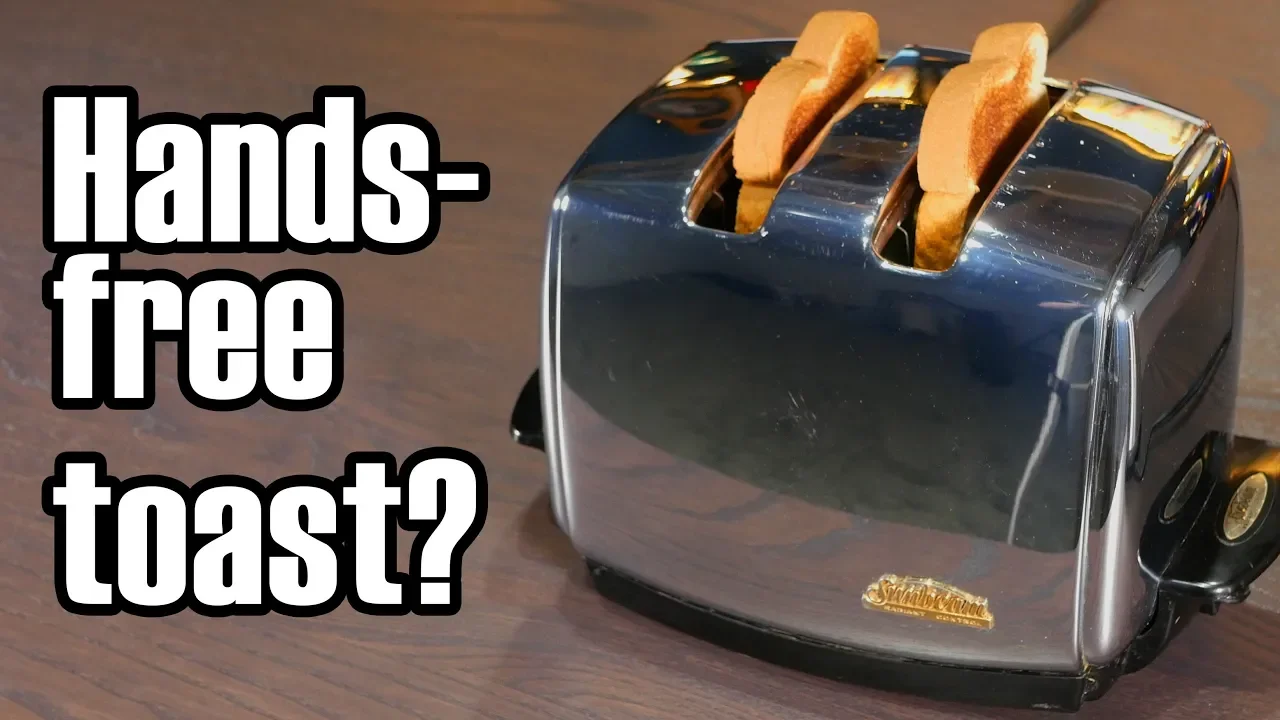
Appliances and design · Standalone · Beginner · Active
Alec's Technology Connections gives ordinary appliances the attention usually reserved for spectacular inventions. A toaster becomes a lesson in sensing, mechanisms and design choices. It's a strong pick for someone who wants to understand the objects already in their home.
Begin with The Antique Toaster that’s Better than Yours (18:28). If the appeal is following a simple object into a much longer explanation, Ceiling fans: the simple idea we keep screwing up (1:11:11) runs for over an hour. The two can be watched in either order. These are detailed design essays, so choose another channel if you need a quick repair instruction for your particular appliance.
Visit Technology Connections on YouTube
5. Practical Engineering

Civil infrastructure · Standalone · Beginner–intermediate · Active
Grady Hillhouse turns roads, drainage and structures into things you can ask sensible questions about. Practical Engineering connects civil engineering ideas with demonstrations and familiar infrastructure. You don't need an engineering degree to start; the appeal is finally noticing what holds the built world together.
How Do Sinkholes Form? (6:41) is the shorter introduction, followed by Why Retaining Walls Collapse (12:51) for a different kind of failure. Both work independently. This is a place to understand mechanisms and trade-offs, rather than get a design specification for a wall in your own garden. For the planning decisions around those structures, continue with City Beautiful.
Visit Practical Engineering on YouTube
6. CGP Grey

Maps, government and systems · Standalone · Beginner · Intermittent
CGP Grey is good at giving a tangled subject a memorable shape. Animated explanations of borders, institutions and rules give you a framework you can carry into the next conversation. The compression is also the limitation: a clean model can leave out important exceptions.
Try The UK Is a Country Made of Countries (5:15), the upload previously titled “The Difference between the United Kingdom, Great Britain and England Explained.” Then watch Try to Rule Fairly and You’ll Be Overthrown (18:13), known as “Rules for Rulers,” as an argument about incentives and power. Either can be your first video. The older examples and simplified models deserve further reading, and public uploads are intermittent.
7. Numberphile

Numbers and mathematical puzzles · Standalone · Beginner upward · Active
Numberphile makes mathematics feel like a conversation. Brady Haran's guests explain numbers and puzzles in their own ways, so the pleasure is partly in following someone else's route through a problem. It suits viewers who like asking “but why?” more than working through a textbook chapter.
Problems with Zero (13:00) begins with an apparently simple number; The Golden Ratio (why it is so irrational) (15:13) explores a familiar proportion with Ben Sparks. Jump into either, and pause when an explanation gets ahead of you. The level varies with the guest and topic. This is an active channel, not a dormant archive just because some of its best introductions are old.
8. Khan Academy
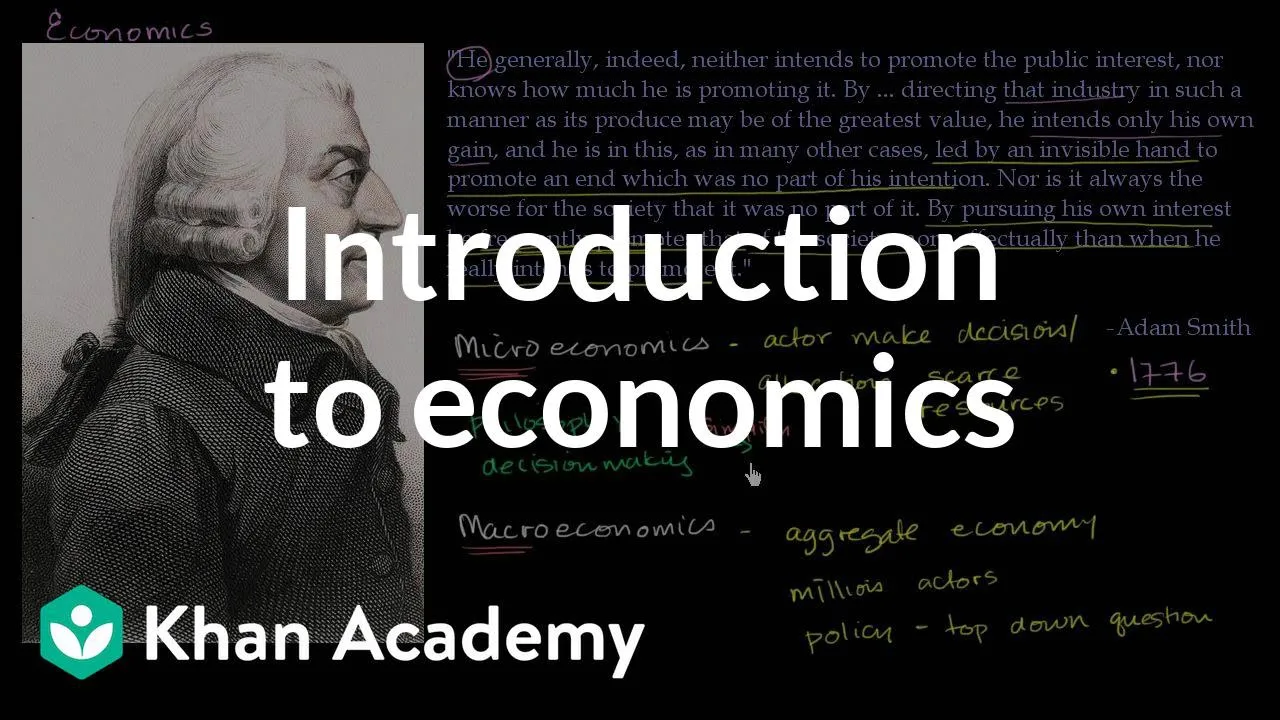
Math and economics foundations · Course · Beginner–college · Active
Khan Academy is where casual interest can become deliberate study. Its explanations and worked examples are less theatrical than much of this list, which helps when you want to return to a specific step. The nonprofit's main platform pairs videos with practice and organized learning paths.
Introduction to economics (9:59) is a way into economic thinking; What is a function? (7:57) is a separate math refresher that benefits from basic algebra. Pick the subject you need, then follow its course and exercises instead of treating these as consecutive lessons. Watching a solution is useful, but trying the next problem yourself is the more demanding part.
9. Money & Macro

Macroeconomics and commentary · Standalone · Some economics helps · Active
Joeri Schasfoort's Money & Macro is useful for examining an economic explanation you've heard elsewhere. The appeal is seeing which claims, assumptions and definitions carry an argument. Its fact-checks are themselves argued analyses, with source links in the descriptions; the channel's verdict isn't a replacement for those sources.
Economist Fact-Checks Johnny Harris (28:07) and Economist fact-checks Gary’s Economics (21:23) are two independent examples of that format. Expect more discussion than a first lesson in supply and demand. If the terminology is unfamiliar, start with MRU or CrashCourse, then come back. Dated commentary explains a debate at that moment, not a permanent forecast or personal investment plan.
Visit Money & Macro on YouTube
10. Wendover Productions

Logistics and economics · Standalone · Beginner · Active
Wendover Productions makes logistics an inviting subject. Flights, prices and networks become stories about how large systems fit together. Choose it when you want the broader economic explanation around an everyday experience, rather than a technical lesson in operating the machinery.
How Airlines Price Flights (11:59) and Why Flying is So Expensive (10:32) form a useful pair, though either works on its own. One focuses on ticket pricing and the other on the cost of flying. These older explainers offer models for thinking about aviation; they aren't current fare guides or instructions for finding a cheap ticket. For physical megaprojects, try The B1M next.
Visit Wendover Productions on YouTube
11 to 30
11. Marginal Revolution University (Economics · Course · Beginner–college · Active). MRU offers short economics modules with a clear path onward. Start with The Demand Curve (3:31) for microeconomics, or What is Gross Domestic Product (GDP)? (4:36) for macroeconomics, then follow the corresponding Principles of Economics course in its official library. Beginners get a manageable concept at a time; students can use the accompanying practice. Founded by Tyler Cowen and Alex Tabarrok, MRU is housed at Mercatus at George Mason University. Mercatus describes its outlook as market-oriented and classical liberal, useful context when the lessons move into disputed policy.
12. Stand-up Maths (Puzzles, probability and coding · Standalone · School math helpful · Active). Matt Parker turns mathematical problems into stories about trying, failing and trying again. Begin with The Parker Machine: it’s 80% accurate. (6:54), a short demonstration with Royal Institution footage and extra explanation, then Someone improved my code by 40,832,277,770% (28:47) for a longer computing puzzle. Both stand alone; some school math helps, and the second asks for more patience with code. It's recreational exploration rather than a programming course. If you enjoy the conversational detours, Numberphile offers another route into mathematical curiosity.
13. Map Men (Jay Foreman) (Maps and UK geography · Standalone · Beginner · Intermittent). Jay Foreman and Mark Cooper-Jones mix maps with sketch comedy in Map Men. Why every world map is wrong (6:16) is an easy first episode. For Jay's Unfinished London series, try Why does London have 32 boroughs? (11:26), about the city's administrative geography. Watch either without following a sequence. Both series reward attention to small visual jokes as well as the explanation. Many examples are UK or London specific, and the comedy compresses the detail. Public releases are intermittent, so enjoy the catalog without expecting a weekly lesson.
14. City Beautiful (Cities, zoning and streets · Standalone · Beginner · Active). Dave Amos's City Beautiful helps residents understand the decisions around their streets. Try How does Houston plan without zoning? (10:01), then The Reason Our Streets Switched to Cul-De-Sacs (7:45): two standalone introductions to planning rules and neighborhood layouts. No specialist vocabulary is needed at the start. Many examples come from North America, especially US zoning and suburbs, so don't assume the same rules govern your town. Pair it with Practical Engineering to move from how places are planned to how their infrastructure works.
15. Great Art Explained (Close looking at art · Standalone · Beginner · Active). James Payne makes a single artwork enough for an evening's curiosity. Begin with The Great Wave by Hokusai (17:00), or choose The Arnolfini Portrait by Jan Van Eyck (15:40) for a painting full of details to examine. Both essays stand alone and welcome people who don't know the terminology of art history. The narrow focus encourages close looking; it also means each film is one interpretation, rather than a survey of everything scholars have said about the work. Nerdwriter1 is a good next stop for more cultural criticism.
16. RobWords (English and etymology · Standalone · Beginner · Active). Rob Watts makes familiar English feel strange again. The genius logic of the NATO phonetic alphabet (23:28) begins with a practical communication system; Why we don’t have a sarcasm mark (20:54) asks why punctuation never settled on a clear signal for sarcasm. Start anywhere, with no linguistics background required. The channel is especially appealing to word lovers and confident English learners who enjoy explanations of usage and word origins. It's about noticing language, rather than a sequential course in speaking or writing it.
17. Geography Now (Countries and cultures · Standalone · Beginner · Active). Paul “Barbs” Barbato and collaborators built Geography Now around country profiles. Geography Now! Japan (16:20) and Geography Now! Germany (15:21) let you compare two places through the same broad format; neither requires watching the earlier alphabetical entries. The channel is still active, while that country-by-country project is now a completed library. Choose it for orientation and questions to pursue, not current population figures or a single definitive portrait of a culture. Older episodes necessarily reflect the time they were made.
18. Langfocus (Language comparison · Standalone · Beginner–intermediate · Intermittent). Paul Jorgensen's Langfocus is for people who enjoy comparing languages. Sample How Similar are Spanish and Portuguese?! (19:01), then The German Language (12:19), or choose whichever language already interests you. The episodes stand alone, though familiarity with a little grammar helps when the comparisons become detailed. This is analysis of languages, not a speaking course. Public uploads are occasional, so start with the existing library rather than expecting a regular lesson schedule.
19. Philosophy Tube (Philosophy and political argument · Standalone · Ready for longer arguments · Active). Abigail Thorn's Philosophy Tube uses performance, characters and staging to develop an argument. Transphobia: An Analysis (23:34) and The Rich Have Their Own Ethics: Effective Altruism & the Crypto Crash (41:34) offer separate entrances into its ethical and political concerns. Choose it when you want an essay to engage with and question; these are argued positions, not a neutral introductory syllabus. The topics can be personal and confrontational, and the channel has recent long-form essays alongside its older work. For a more modular introduction to philosophical concepts, try Wireless Philosophy.
20. The B1M (Construction and megaprojects · Standalone · Beginner · Active). Fred Mills and The B1M make the scale of construction understandable through individual projects. Start with This is The World’s Most Remote Infrastructure Project (32:14), or The Insane Scale of Europe’s New Mega-Tunnel (27:51) if tunnels are your way into infrastructure. Both are standalone documentary explainers for general viewers. The attraction is the connection between a physical structure and the money, geography and coordination behind it. Project plans, budgets and completion dates can change after filming; these videos are dated accounts, not live project dashboards.
21. Storied (Language, folklore and literature · Standalone · Beginner · Active). Storied is PBS Digital Studios' home for arts and humanities series, with different hosts and approaches. For language, start with Erica Brozovsky's Otherwords: The Screwed-Up History of English Spelling (8:06), followed by You Were Probably Taught to Read Wrong (8:46). Both work independently and need no specialist background. The appeal is finding a question inside something as familiar as reading. A short episode can open a discussion, but it can't settle every educational or linguistic debate; follow the sources when a claim matters to you.
22. LegalEagle (US law and courts · Standalone · Beginner · Active). Devin Stone's LegalEagle explains American legal ideas through cases and screen depictions. Start with Real Lawyer Reacts to My Cousin Vinny (25:41) for a film-based introduction, then What is a Case Brief? (9:28) if you want to understand a law student's tool for organizing a judgment. Both stand alone, though the latter is more study-oriented. This is US-law context: its procedures and constitutional examples don't transfer to England and Wales, Scotland or Northern Ireland. Commentary is analysis, not personalized legal advice, and movie clips may reveal plot details.
23. Nerdwriter1 (Art, film and music criticism · Standalone · Beginner · Active). Evan Puschak's Nerdwriter1 is for viewers who want to look or listen more closely. Harry Potter: What Magic Sounds Like (7:53) examines film sound; Mary Cassatt: The Impressionist Who Painted The Mind (11:15) offers a painting-focused alternative. Pick either without a course sequence or prior art-history study. These are critical readings, so the pleasure is in considering an interpretation rather than collecting a settled answer. Individual film and music essays can face rights or territory changes even while the channel remains available; the linked starters are the specific uploads to try.
24. Wireless Philosophy (Logic and epistemology · Course · Beginner–undergraduate · Archive). Wireless Philosophy is an archive recommendation for learning the vocabulary of arguments. Begin with Geoff Pynn's Introduction to Critical Thinking (9:50) and explore the official Wi-Phi video library. Jennifer Nagel's Introduction to Theory of Knowledge (6:11) opens a separate Theory of Knowledge series. Both welcome beginners; follow one topic at a time if you're studying rather than sampling. The short academic modules leave room for exercises and further reading. Choose the existing library, rather than subscribing with an expectation of new lessons.
25. How To Cook That (Food and online claims · Standalone · Beginner · Active). Ann Reardon's How To Cook That brings food knowledge to the claims circulating around cooking videos. Watch Dangerous vitamins promoted on TikTok (12:51), then Debunking 5-Minute-Craft’s FAKE TikTok debunk!! (15:22), as two standalone investigations rather than recipes to copy. Beginners can follow the questions without a food-science background. The channel also contains baking projects, but these starters are about judging online claims. Some demonstrations involve hazardous ideas, and the vitamins episode is critical commentary, not medical guidance or an invitation to try the products.
26. NativLang (Language change and writing · Hybrid · Beginner–intermediate · Active). NativLang uses animation to explore how languages and writing change. What Latin Sounded Like – and how we know (5:59) is a compact introduction to reconstructing pronunciation; Thoth’s Pill – an Animated History of Writing (47:25) is the full animated writing-history film, not its trailer. Either can be watched first, though the longer film asks for sustained attention. Josh's credited animation makes a technical subject approachable for curious beginners. Reconstruction involves evidence and uncertainty, so treat a compelling story as a starting point for its linked sources, not a recording of ancient speech.
27. Two Cents (Personal finance (US examples) · Standalone · Beginner · Active). Two Cents makes basic money questions approachable with presenters Philip Olson and Julia Lorenz-Olson. Budgeting Basics! (5:13) and Tips For Getting Out of Debt (5:23) are independent introductory modules; start with the one closest to the concept you want to understand. PBS Digital Studios' presentation is accessible, but the examples belong to a US context. Tax, credit and retirement arrangements vary across countries and over time. These are explanations of ideas, not a financial plan tailored to your circumstances. The channel has recent uploads as well as a useful older library.
28. Lessons from the Screenplay (Writing and adaptation · Standalone · Film lovers / beginner writers · Archive). Michael Tucker and team's Lessons from the Screenplay is a film-analysis archive for writers and attentive moviegoers. Arrival — Examining an Adaptation (13:35) examines adaptation; Jurassic Park — Using Theme to Craft Character (11:34) connects theme to character. Either works on its own, but watch the films first if you want to avoid major spoilers. The essays offer specific readings of successful stories, not a formula that every screenplay must follow. The main channel's dated latest uploads are from 2022; film clips can also face video-level rights changes, so its continuing existence isn't a playback guarantee.
29. Dad, how do I? (Everyday practical skills · Standalone · Absolute beginner · Intermittent). Rob Kenney's Dad, how do I? is a friendly reference shelf for tasks you were never shown. How to Tie a Tie Easily (2:02) is the quick introduction; How to Change a Tire (13:24) demonstrates a more involved job. Pick the task you need rather than watching in order. Beginners are the intended audience, though the hardware, household and vehicle examples often reflect North American conventions. Match any practical job to your equipment and its manufacturer's safety instructions; a video can't check your vehicle or working conditions. Recent uploads also include personal updates.
30. The Futur (Design and creative business · Hybrid · Beginner–working designer · Active). Chris Do and collaborators at The Futur connect design with the business of selling creative work. 3 Pricing Strategies – How To Price Your Service 2024 (17:44) is the business introduction; Typography Tutorial – 10 rules to help you rule type (3:35) gives you a shorter design lesson. Sample either independently, then choose a relevant topic sequence if you want more depth. It suits aspiring freelancers as well as working designers. The teaching sits alongside paid courses, coaching and affiliate offers, so distinguish a useful principle from a sales pitch. Pricing examples depend on the client, market and type of work.
The full list at a glance
Choose a subject and a commitment level. The two starter links in each row match the videos above; they are alternatives unless the entry suggests watching them together. Activity describes the channel, not the age of these particular lessons.
| Channel / creator | Focus / format / activity | Suggested viewer | Two starters |
|---|---|---|---|
| 1. 3Blue1Brown Grant Sanderson | Visual mathematics · Hybrid Activity: Active | Algebra helpful | Fourier transform (19:42) Eigenvectors (Chapter 14) (17:16) |
| 2. CrashCourse Complexly | Broad academic subjects · Course Activity: Active | Beginner–college | Philosophy #1 (10:35) Economics #1 (12:09) |
| 3. TED-Ed TED; credited educators and animators | Short ideas across subjects · Standalone Activity: Active | Beginner | Misleading graphs (4:10) Economic bubbles (4:17) |
| 4. Technology Connections Alec / Technology Connections | Appliances and design · Standalone Activity: Active | Beginner | Antique toaster (18:28) Ceiling fans (1:11:11) |
| 5. Practical Engineering Grady Hillhouse | Civil infrastructure · Standalone Activity: Active | Beginner–intermediate | Sinkholes (6:41) Retaining walls (12:51) |
| 6. CGP Grey CGP Grey | Maps, government and systems · Standalone Activity: Intermittent | Beginner | UK countries (5:15) Rules for rulers (18:13) |
| 7. Numberphile Brady Haran and guests | Numbers and mathematical puzzles · Standalone Activity: Active | Beginner upward | Problems with zero (13:00) Golden ratio (15:13) |
| 8. Khan Academy Khan Academy | Math and economics foundations · Course Activity: Active | Beginner–college | Economics introduction (9:59) Functions (7:57) |
| 9. Money & Macro Joeri Schasfoort | Macroeconomics and commentary · Standalone Activity: Active | Some economics helps | Johnny Harris fact-check (28:07) Gary’s Economics fact-check (21:23) |
| 10. Wendover Productions Wendover Productions | Logistics and economics · Standalone Activity: Active | Beginner | Airline pricing (11:59) Flying costs (10:32) |
| 11. Marginal Revolution University Tyler Cowen, Alex Tabarrok / Mercatus | Economics · Course Activity: Active | Beginner–college | Demand curve (3:31) GDP (4:36) |
| 12. Stand-up Maths Matt Parker | Puzzles, probability and coding · Standalone Activity: Active | School math helpful | Parker Machine (6:54) Code optimization (28:47) |
| 13. Map Men (Jay Foreman) Jay Foreman and Mark Cooper-Jones | Maps and UK geography · Standalone Activity: Intermittent | Beginner | World maps (6:16) London boroughs (11:26) |
| 14. City Beautiful Dave Amos | Cities, zoning and streets · Standalone Activity: Active | Beginner | Houston zoning (10:01) Cul-de-sacs (7:45) |
| 15. Great Art Explained James Payne | Close looking at art · Standalone Activity: Active | Beginner | The Great Wave (17:00) Arnolfini Portrait (15:40) |
| 16. RobWords Rob Watts | English and etymology · Standalone Activity: Active | Beginner | NATO alphabet (23:28) Sarcasm mark (20:54) |
| 17. Geography Now Paul “Barbs” Barbato and team | Countries and cultures · Standalone Activity: Active | Beginner | Japan (16:20) Germany (15:21) |
| 18. Langfocus Paul Jorgensen | Language comparison · Standalone Activity: Intermittent | Beginner–intermediate | Spanish / Portuguese (19:01) German (12:19) |
| 19. Philosophy Tube Abigail Thorn | Philosophy and political argument · Standalone Activity: Active | Ready for longer arguments | Transphobia: An Analysis (23:34) Effective altruism (41:34) |
| 20. The B1M Fred Mills / The B1M | Construction and megaprojects · Standalone Activity: Active | Beginner | Remote infrastructure (32:14) Europe’s mega-tunnel (27:51) |
| 21. Storied PBS Digital Studios; multiple hosts | Language, folklore and literature · Standalone Activity: Active | Beginner | English spelling (8:06) Learning to read (8:46) |
| 22. LegalEagle Devin Stone | US law and courts · Standalone Activity: Active | Beginner | My Cousin Vinny (25:41) Case briefs (9:28) |
| 23. Nerdwriter1 Evan Puschak | Art, film and music criticism · Standalone Activity: Active | Beginner | Harry Potter sound (7:53) Mary Cassatt (11:15) |
| 24. Wireless Philosophy Wi-Phi academic contributors | Logic and epistemology · Course Activity: Archive | Beginner–undergraduate | Critical thinking (9:50) Theory of knowledge (6:11) |
| 25. How To Cook That Ann Reardon | Food and online claims · Standalone Activity: Active | Beginner | TikTok vitamins (12:51) 5-Minute Crafts debunk (15:22) |
| 26. NativLang Josh / NativLang | Language change and writing · Hybrid Activity: Active | Beginner–intermediate | Latin pronunciation (5:59) Thoth’s Pill (47:25) |
| 27. Two Cents PBS Digital Studios; Philip and Julia | Personal finance (US examples) · Standalone Activity: Active | Beginner | Budgeting (5:13) Debt (5:23) |
| 28. Lessons from the Screenplay Michael Tucker and team | Writing and adaptation · Standalone Activity: Archive | Film lovers / beginner writers | Arrival (13:35) Jurassic Park (11:34) |
| 29. Dad, how do I? Rob Kenney | Everyday practical skills · Standalone Activity: Intermittent | Absolute beginner | Tie a tie (2:02) Change a tire (13:24) |
| 30. The Futur Chris Do and collaborators | Design and creative business · Hybrid Activity: Active | Beginner–working designer | Pricing strategies (17:44) Typography (3:35) |
Watch them like a TV channel
Add one channel with up to five of each creator's latest videos, updated daily. No Shorts or live streams.
Use the direct links above when you want to start these specific videos from the beginning. For a course, keep to the creator's lesson order; for an evening of curiosity, try a short explanation, a longer essay and a subject you wouldn't normally choose.
For more sustained viewing, explore our best documentaries on YouTube. To turn food curiosity into something to make, try the best cooking YouTube channels.